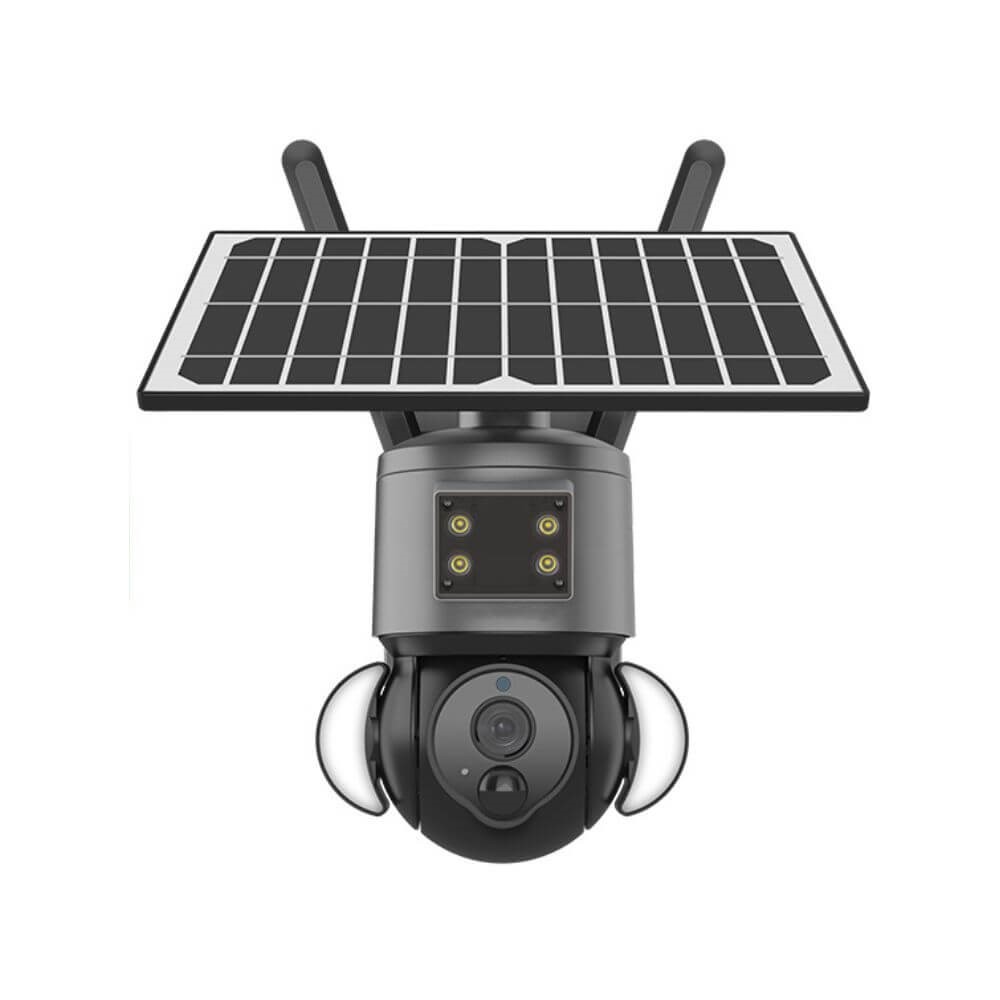
The Solar Powered Battery 3 MP 2 K Floodlight PTZ Camera is a versatile, self-sufficient surveillance solution ideal for remote or off-grid environments. Its combination of high-resolution imaging, PTZ flexibility, floodlight deterrence, and solar-powered autonomy makes it an excellent choice for stand-alone security needs. While this cctv camera lacks integration options for advanced multi-camera setups, it excels at providing simple, robust, and energy-conscious outdoor monitoring.
- If the installation site is with WIFI, we suggest you buy a wifi version.
- If the installation site is without WIFI, we suggest you buy a 4G sim version.
- A security camera can be controlled on your phone. No matter where you are, even if another city, or another country. You still can monitor that place on your phone.
Optical & Imaging System
- Image Sensor: 1/3″ CMOS sensor delivering 3 MP resolution (approximately 2048×1536), offering visual fidelity between Full HD 1080p and 2K UHD. CMOS ensures low-power and high-sensitivity imaging.
- Lens: Fixed 3.6 mm focal length providing an approximate horizontal field of view (FoV) in the range of 70°–90°, optimal for general surveillance.
- IR-CUT Filter: Enables all-day operation by mechanically switching between color (day) and IR-sensitive (night) modes.
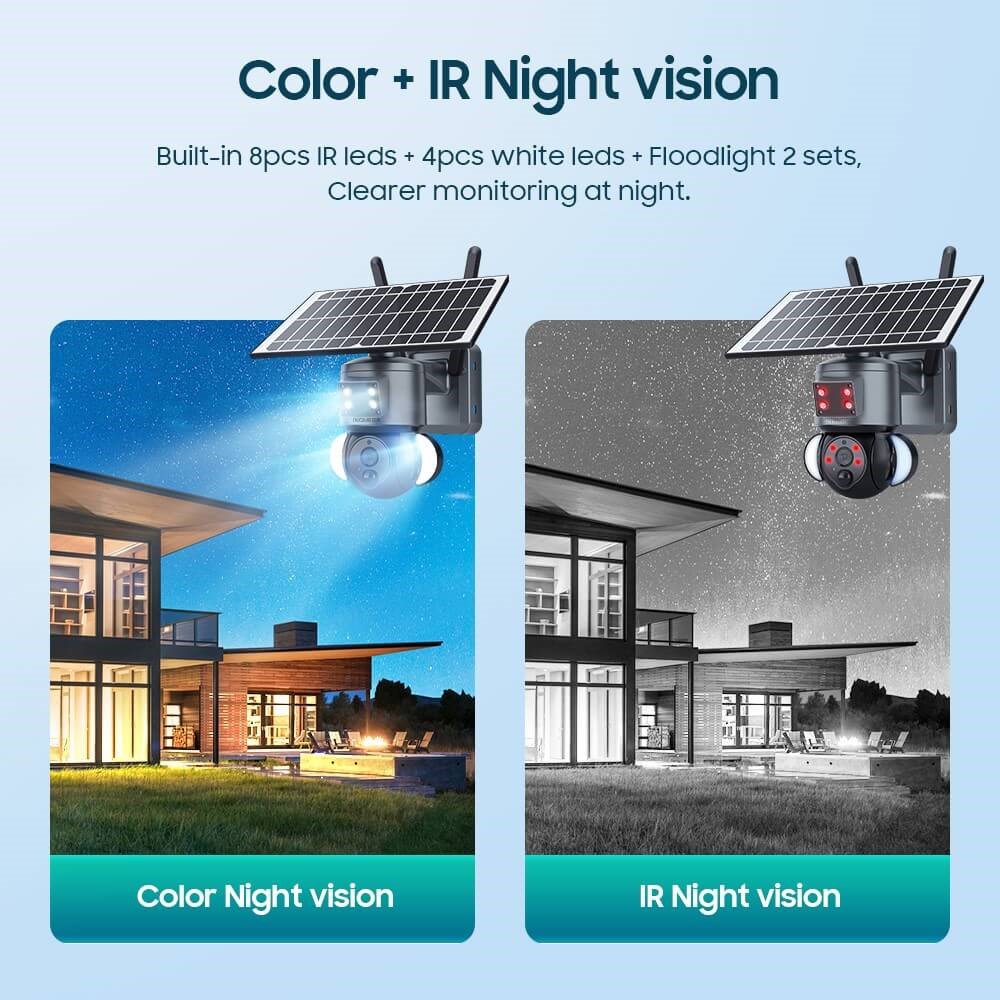
- Night Vision: Integrated IR LEDs allow monochrome imaging in zero-light conditions; the typical effective range is around 10–15 m.
- Floodlight: The floodlight includes high-intensity LEDs to illuminate the monitored area for color night vision and active deterrence.
Power & Energy Management
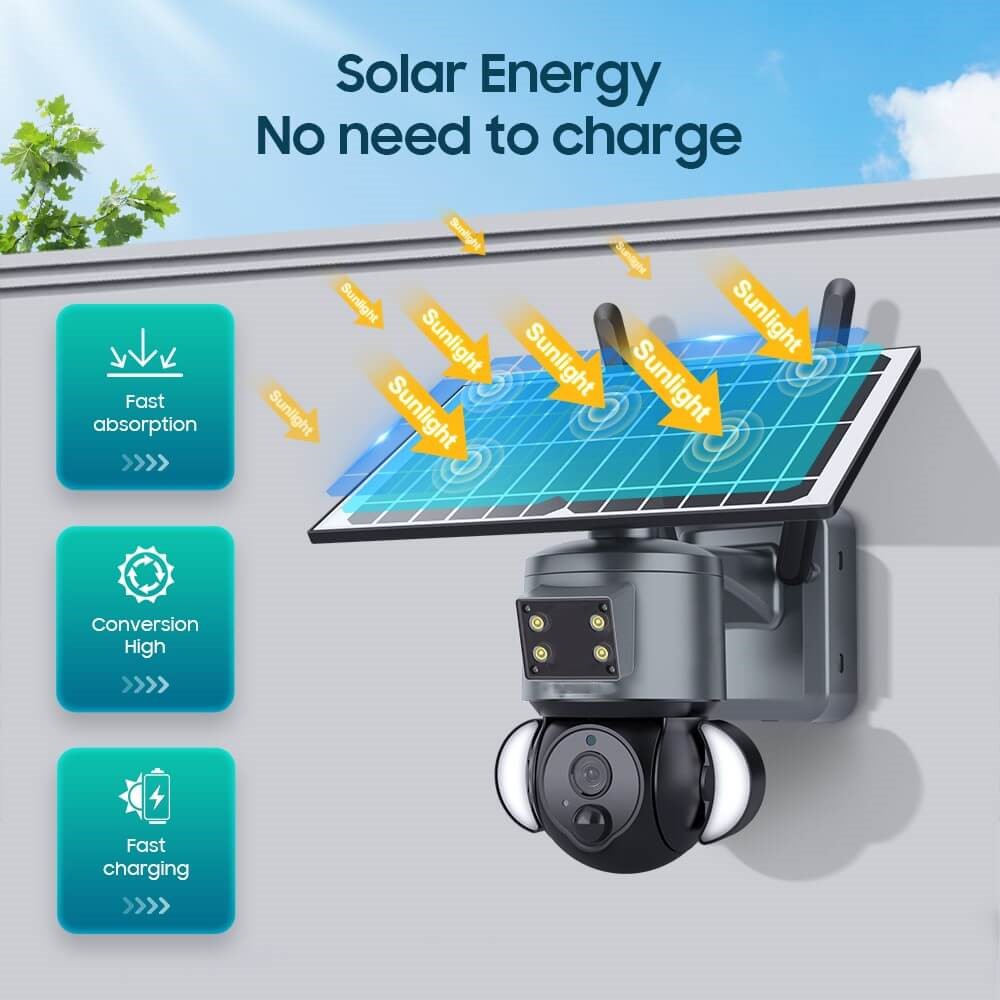
- Solar Panel: External solar panel captures photovoltaic energy. Exact wattage is often in the 5–8 W range for similar systems.
- Battery Pack: High-capacity rechargeable Li-ion battery (estimated 3–12 Ah); some larger configurations can include up to 20000 mAh capacity.
- Power Strategy: Features real-time power management with MPPT-type solar charge controllers and motion-triggered wake-up to conserve battery. Continuous 24/7 recording is supported but significantly increases power consumption.
| Parameter | Specification |
|---|---|
| Sensor | 1/3" CMOS, 3 MP |
| Lens | 3.6 mm, ~75° FoV |
| PTZ | Pan 355°, Tilt 90°, Digital Zoom |
| Power | Solar panel (5–8 W), Li-ion battery (10–20 Ah) |
| Networking | 2.4 GHz Wi-Fi / 4G LTE |
| App | UBox (iOS/Android) |
| Storage | MicroSD (≤128 GB), optional cloud |
| Detection | PIR + image motion, optional tracking |
| Night Vision | IR LEDs with IR-cut filter |
| Two-Way Audio | Yes |
| Weatherproofing | IP65–IP66 |
| Operating Temp | -15 °C to +60 °C |
| Weight | ≈2.3 kg |
Mechanical Pan–Tilt–Zoom (PTZ)
- Pan Range: Approximately 355° horizontal rotation allows near-complete coverage of surrounding areas.
- Tilt Range: Around 90° vertical movement to monitor from ground level up to overhead.
- Zoom: Either fixed or digital zoom (up to 4×) is typical for these models, with most floodlight-equipped units using digital zoom.
- Mechanics & Control: Precision stepper motors and internal gears enable accurate remote control through the mobile application.
Connectivity & Communications
- Variants:
- Wi-Fi version: Connects to 2.4 GHz IEEE 802.11 b/g/n networks, allowing app-based live viewing and control.
- 4G version: Uses a Nano SIM for LTE cellular connectivity, making it ideal for remote locations without Wi-Fi access.
- App Platform: The UBox app on Android and iOS enables live view, PTZ control, two-way audio communication, motion alerts, and playback.
- Cloud/NAS: No support for third-party NVRs, Blue Iris, ONVIF, or RTSP streaming; management and storage are handled exclusively through the app and local microSD.
Storage & Data
- Recording Behaviors: Supports motion-triggered recordings, which is energy-efficient; continuous recording is possible but drains battery faster.
- Local Storage: Accepts microSD cards up to 128 GB; supports loop recording to overwrite oldest files automatically.
- Cloud Backup: Limited cloud storage options may be available through the app, though full subscription details vary.
Sensing & Smart Detection
- PIR/Motion Sensor: Combines passive infrared (PIR) and image-based motion detection to activate recording and floodlight.
- Humanoid Detection & Tracking: Some advanced versions support human shape detection and automatic tracking, though the floodlight variant may focus on basic motion triggers.
- Event Push: Motion alerts are sent to paired mobile devices via push notifications.
Audio Features
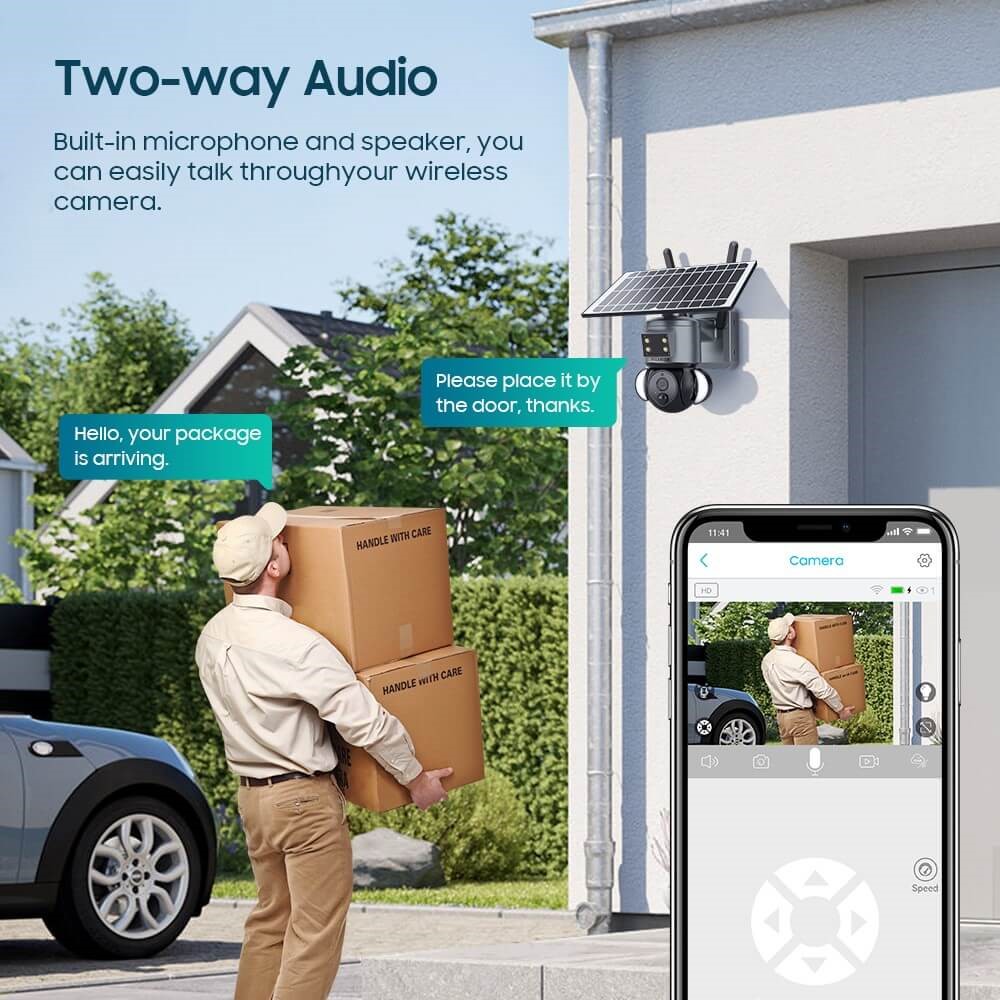
- Two-Way Audio: Equipped with a microphone and speaker for interactive communication, allowing users to warn or converse with people near the camera via the app.
Environmental & Durability Specs
- Ingress Protection: Typically rated IP66, making it dust-tight and resistant to heavy rain.
- Operating Conditions: Designed to operate between -15 °C and +60 °C, with humidity resistance up to 90 % RH.
- Weight: Approximately 2.3 kg, slightly heavier than basic solar cameras due to the integrated floodlight.
Power Budget & Efficiency
- Standby Consumption: Very low standby power draw (under 0.1 W in similar models).
- Solar Recharge Cycle: With a 5–8 W panel and a 10–20 Ah battery, autonomy can range from 3 to 7 days without sun; a full recharge usually requires 5–8 hours of strong sunlight.
- Floodlight Draw: When activated, the floodlight can draw 10–20 W; it is generally only used when motion is detected to save energy.
Installation & Maintenance
- Mounting: Can be mounted on walls or ceilings using a PTZ base; secure fixing is essential to prevent vibration or drift.
- Solar Panel Placement: Should be installed facing south (in Northern Hemisphere) at an optimal angle (about 30°) for maximum solar gain.
- Connectivity Setup: Wi-Fi version connects via SSID and password, while the 4G version requires SIM card setup, including APN configuration.
- Firmware & App Maintenance: Firmware updates and app maintenance are managed through the mobile application. Periodic full battery discharge can help extend battery health.
System Integration
- Standalone Operation: Works independently without needing wired networks, PoE, or NVR connections.
- Smart Ecosystem: No ONVIF or RTSP support, so it cannot integrate into standard third-party surveillance ecosystems. It is intended for single or small standalone installations.
Technical Considerations
- Energy-Aware Operation
Use motion-triggered recording to maximize battery life. Avoid long continuous live streaming. - Lighting vs Recording Tradeoff
The floodlight offers strong deterrence but increases power use. Solar panel sizing should match expected usage. - Environmental Resilience
Weather sealing ensures long-term durability; keep solar panels clean and properly angled for best performance. - Connectivity Choices
Wi-Fi is ideal for areas with a stable signal; 4G works best for remote or rural properties but may require a data plan. - Integration Limits
Best for standalone setups rather than integrated multi-camera systems, given lack of standard protocol support.
Use Cases
- Off-grid homes, gardens, farm entrances.
- Construction sites or temporary setups without electricity.
- Driveways or gates where deterrence lighting is valuable.
- Remote properties requiring self-sufficient surveillance.
⚠️ Limitations
- Cannot integrate with ONVIF or RTSP systems.
- Floodlight brightness may be unsuitable for covert use.
- Battery lifespan can shorten under very hot climates.
- Continuous streaming drains battery rapidly.

Reviews
There are no reviews yet.